
Moving Checklist: Move Without the Last-Minute Panic

A move isn't one day's work. It's a lot of small tasks with different dates, stacked on top of one another. Packing, changing an address, and sorting out utilities can all show up at once, and the next step gets blurry.
This isn't a guide to fitting every task on one perfect page. It's about splitting what has to happen now from what can wait, by date. The details can change with the home, the contract, and the movers.
A month out: lock the date and the large work first
Once the moving date is set, write down the work tied to a date before you write down what you'll do on the day itself. That includes the move date and a backup, whether you need the elevator or parking, and a visit or contract with a moving company. Sorting what you'll throw away, give away, or take with you also makes the size of the move easier to see.
This is a good time to list every place that will need a new address. You don't have to change them all now. You only need the list in one place — banks, insurance, your phone plan, subscriptions, delivery addresses, and similar ties to daily life.
Measuring the new rooms belongs in this window too. Whether a fridge or a desk will fit, and what you should sell or give away first, is easier to decide now than on moving day.

A week out: pack, and line up utilities and contacts
In the last week, pack the things you don't use every day first. Keep daily items, valuables, contracts, ID, and chargers in a separate box, or in a bag you'll carry yourself. Label each box with the room and a short note on what's inside, so you can decide which doors to open first in the new place.
Ask providers ahead of time about electricity, gas, water, and internet — what needs to be stopped, moved, or started. If someone has to be at the old home and the new home at different hours, settle that now too. Put keys, door codes, parking, and the building office number for both places on one sheet, and the day itself will feel less confusing.
Moving day: keep only what is hard to undo
On the day itself, don't grow the list. Keep the things that are hard to fix later. Check the meter readings, the condition of the home, the keys and access cards, and how the shared entrance works, and take photos if you can.
Keep valuables, important papers, medicine, and a charged phone with you, not in the moving load. If children or pets are part of the day, put their care plan at the top of the same list.
After you arrive: report the new address, then unpack in stages
If you wait until every box is open before you change the address, it's easy to miss a task that has a date attached. In Korea, a move-in report (전입신고) has to be filed within 14 days of moving into the new home. You can do it online on Government24, or in person at the local office for the new address. In some cases a visit may be required, so take one look at the official notes.
After that, work down the address-change list you made a month earlier. Checking for things that need fixing, and opening boxes, can be done room by room if you aren't in a rush. Opening the spaces you need for sleep and meals first is usually more helpful than emptying every box in a day.

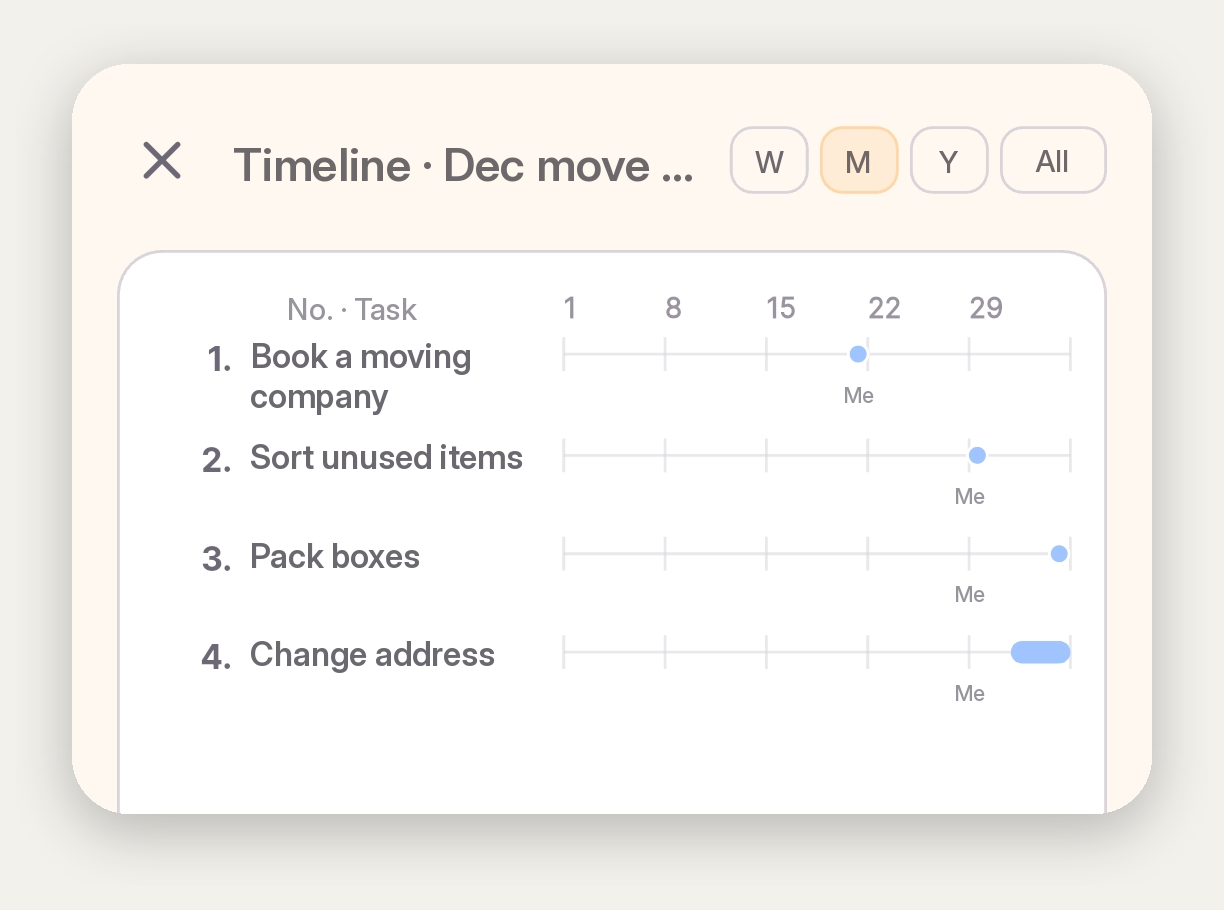
A paper list can be enough. A calendar can be enough too. There are lots of to-do apps out there, but if you want to see work that stretches across several days at a glance, I'd recommend Flowin. You can see when a task starts and when it ends, laid out like a bar.