
Study Planner Tip: Don't Fill Every Box

Many people fill in a neat study schedule and fold it away two days later. That usually isn't only a matter of willpower. If you add study hours before subtracting class, travel, meals, and sleep, and if you write down much more than you actually finished last week, the whole grid slips as soon as one small thing runs long.
This isn't a method that promises better grades. It's about building a weekly study schedule you can keep, and revising it at the weekend.
Block the time you can't move, and treat only what's left as study time
Before you fill a blank weekly grid with studying, mark the time that's already spoken for. Classes, commuting, tutoring, a part-time job, meals, and sleep come first. What remains is the time you can actually sit down.
A day can look empty and still be short once you subtract travel and setup. Starting from an honest amount of time is what lets the schedule last.
Write goals as amounts you can tell are finished
"Study math hard" or "study for three hours" doesn't make it clear when you're done. If this week's must-do work is written as an amount — "rework 12 missed problems," "outline four passages" — you can compare the plan with what actually happened.
Don't drop a large project into a single square. Split it into pieces you can finish in a day. Leave room in the week for review or missed problems, not only for new pages. As a test gets closer, you may need more time to revisit what you already got wrong than to add new chapters.
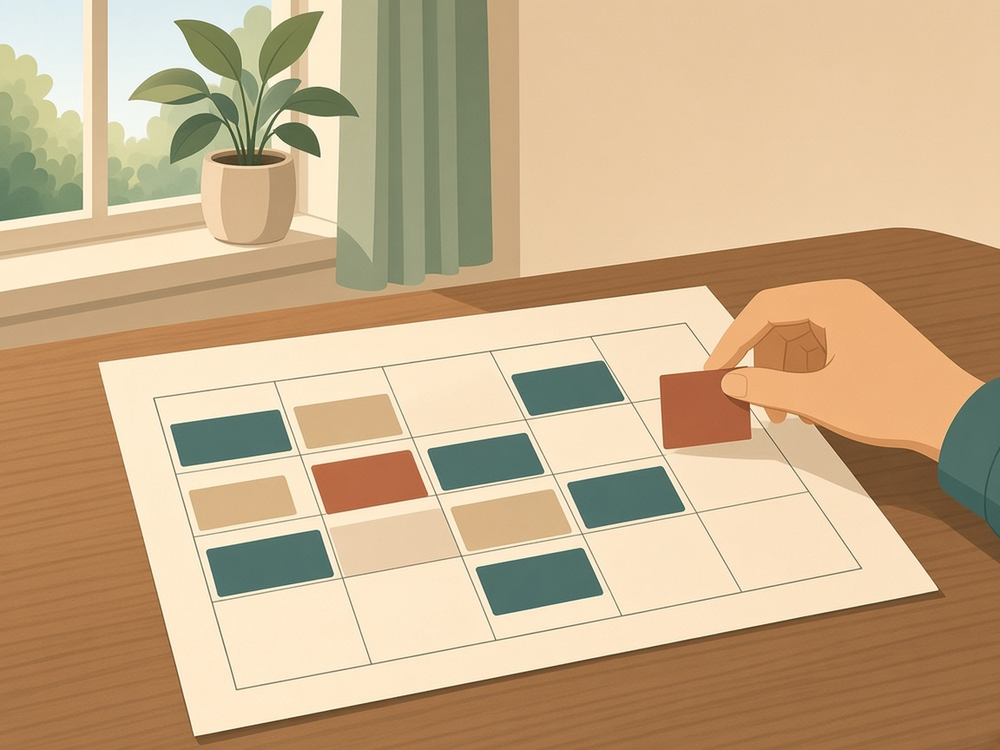
Leave some squares empty, and don't stack a missed day onto the next one
If every square in the week is essential, one off day pushes the rest off the page. It's better to leave two or three slots empty, or to mark them only as optional. Some people even suggest leaving about half a day in the week open.
When a day's work slips, adding it on top of the next day often breaks that day too. Move the leftover work into an empty square, or reduce this week's target. If the same weekday keeps coming up empty, start treating that day as a rest square.
At the weekend, revise from what you actually did
On Sunday or at the weekend, put the planned squares next to what you actually finished. If you wrote twenty items and finished twelve, raising next week to twenty-five is a way of writing down the same miss again. Set next week close to the hours you actually sat and the amount you actually finished, and the schedule will sit nearer to real life.
Take a moment to sort why something didn't get done. Too little time, a task that was too large, or focus that kept breaking each suggest a different fix. A study schedule isn't a page you finish once. It's a tool you rewrite every week.

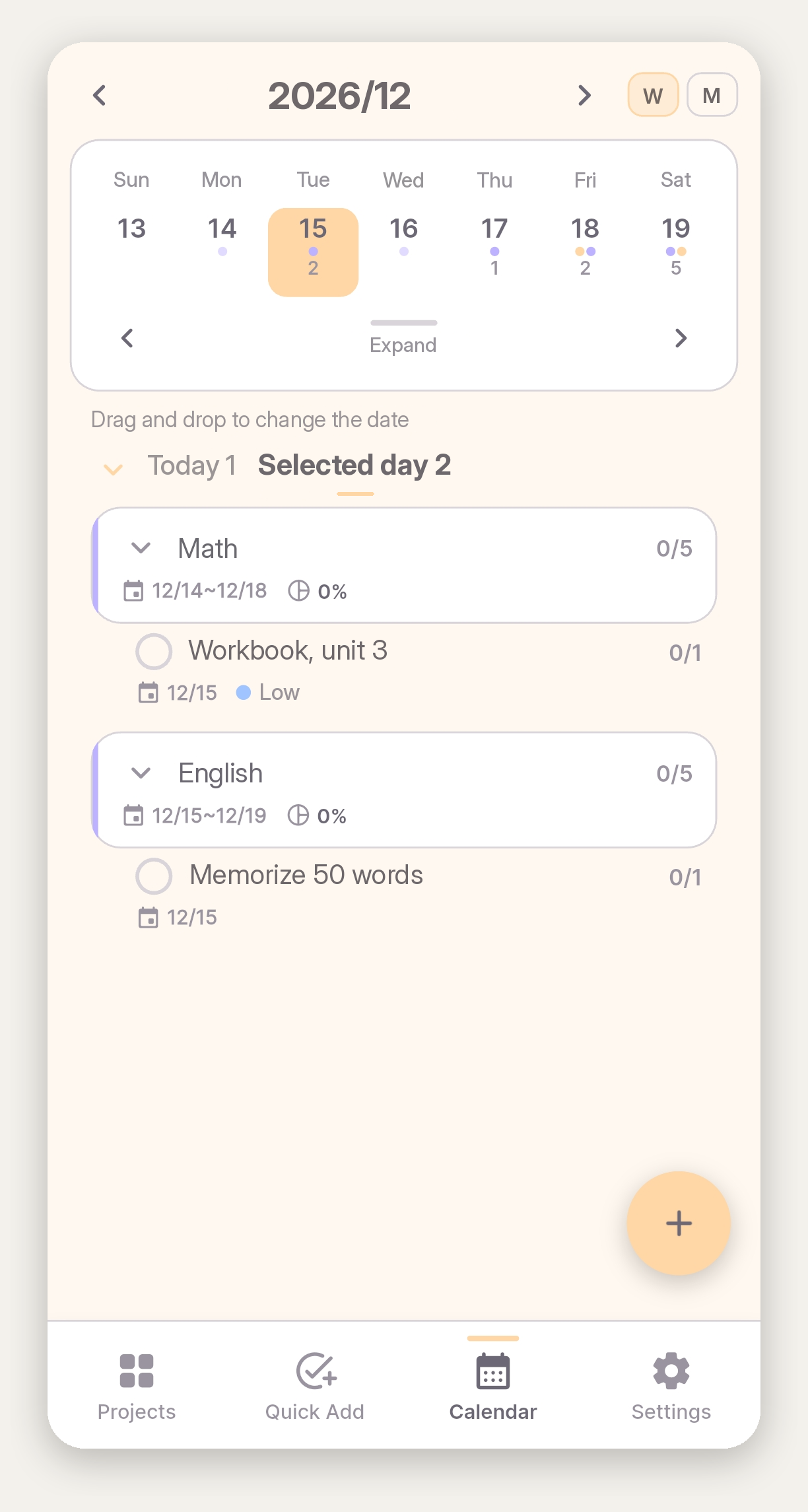
A paper list can be enough. A school planner can be enough too. There are lots of to-do apps out there, but if you want the tasks you wrote to show up on your phone calendar too, I'd recommend Flowin. Unfinished tasks appear as all-day events, and appointments that were already on the calendar don't come into the app.